Compliance Records Environmental Managers Need for Tannery Effluent
Leather goods effluent treatment plants live with variable loads. Beamhouse wash water, liming residues, unhairing carryover, fleshing fat, protein fragments, surfactants, dyes, and finishing auxiliaries rarely arrive in neat patterns. When a discharge review or customer ESG audit starts, the environmental manager needs more than final outlet numbers. You need a record trail that explains what entered the ETP, how the plant responded, and why discharge remained controlled.
Peltora supplies enzyme solutions for tannery wastewater treatment where protein, fat, odor, sludge behavior, and treatment stability matter. This guide outlines the records that help ETP teams defend performance, improve internal control, and reduce compliance surprises.
Why tannery ETP records need process context
A tannery effluent record is not just a laboratory file. Regulators, brand customers, and internal leadership increasingly want to see operating discipline: what changed in production, what changed in treatment, and what evidence supports the response.
For leather goods facilities, the most useful compliance file connects four layers:
- Production source events — beamhouse, retanning, dyeing, fatliquoring, finishing, floor washing, and batch timing.
- Influent condition — load, appearance, odor, sulfide risk, grease/fat expression, suspended matter, and shock events.
- ETP response — equalization, pH correction, biological health, enzymatic pretreatment, aeration behavior, settling, and sludge handling.
- Discharge and disposal evidence — outlet results, sludge movement, incident actions, and sign-off.
When these layers are recorded together, an audit discussion becomes operational rather than defensive.
Core records every environmental manager should maintain
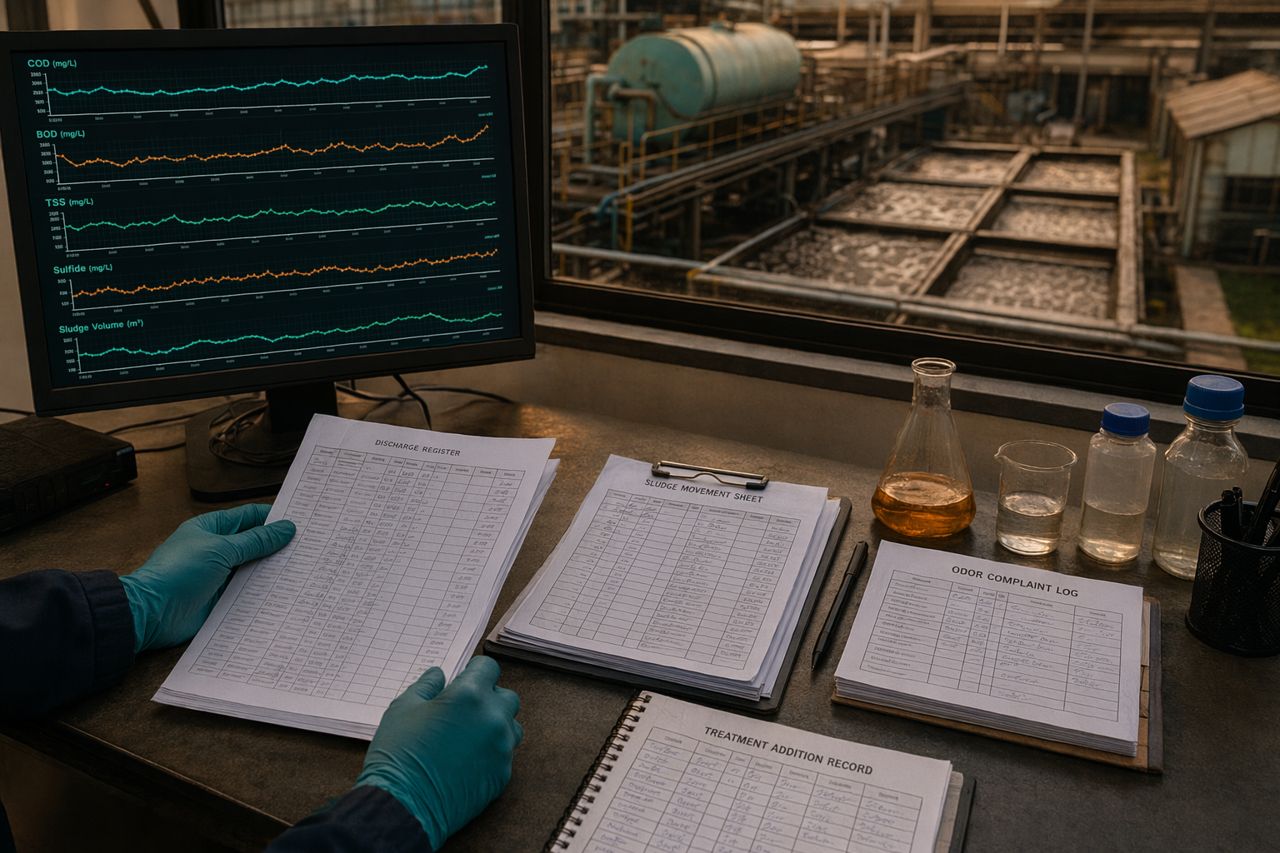
1. Discharge compliance register
Keep a controlled register for final outlet results and regulatory submission history. This should be easy to filter by date, parameter, sample location, responsible person, and corrective action reference.
Typical tannery parameters include:
- COD and BOD trend records
- TSS and settleable solids observations
- Sulfide and odor-related observations
- pH and alkalinity control notes
- Oil, grease, and floatable matter notes
- Color and visual clarity comments where required
- Flow and hydraulic loading records
- Any site-specific consent or customer-required parameters
The key is consistency. A clean register helps show whether a result was isolated, seasonal, linked to production, or linked to a known plant upset.
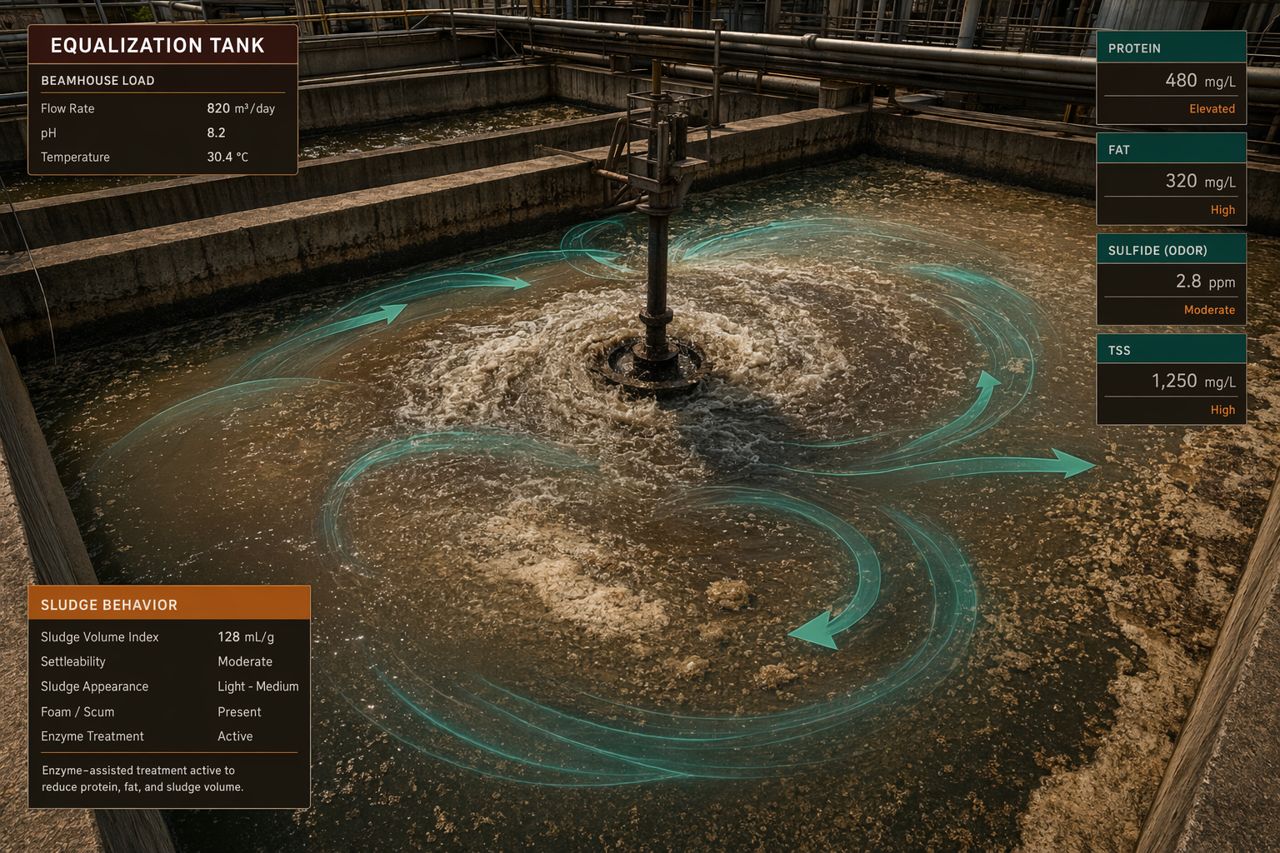
2. Influent and equalization tank log
The equalization tank is often where tannery variability first becomes visible. Record more than readings. Capture what operators actually see.
Useful fields include:
- Incoming source area or production block
- Strong beamhouse carryover, liming residues, or unhairing influence
- Visible fat, scum, hair fragments, proteinaceous solids, or foam
- Odor strength and character, especially sulfide-like odor
- Color changes linked to dyeing or finishing
- Mixer and transfer pump status
- Equalization retention concerns, bypasses, or abnormal inflow
These notes are valuable when final discharge changes later in the day. They show that the ETP team understood the incoming load and adjusted treatment accordingly.
3. Chemical and enzyme treatment log
For any treatment aid, including enzymes, record the business-relevant facts: what was added, where, why, and what operational change followed.
For Peltora enzyme programs, a practical record can include:
- Product name and batch reference
- Addition point, such as equalization, primary treatment, sludge conditioning, or targeted pretreatment
- Pump setting or manual addition method
- Production condition that triggered the addition, such as high fat load, protein-rich wash, odor concern, or sludge bulking risk
- Operator responsible
- Visual and operational response, such as reduced scum persistence, improved sludge release, lower odor carryover, or more stable settling
- Follow-up action if the plant did not respond as expected
This is especially important if you are comparing enzyme-assisted treatment against a chemical-only baseline. It gives management a defensible operating record, not just anecdotal feedback.
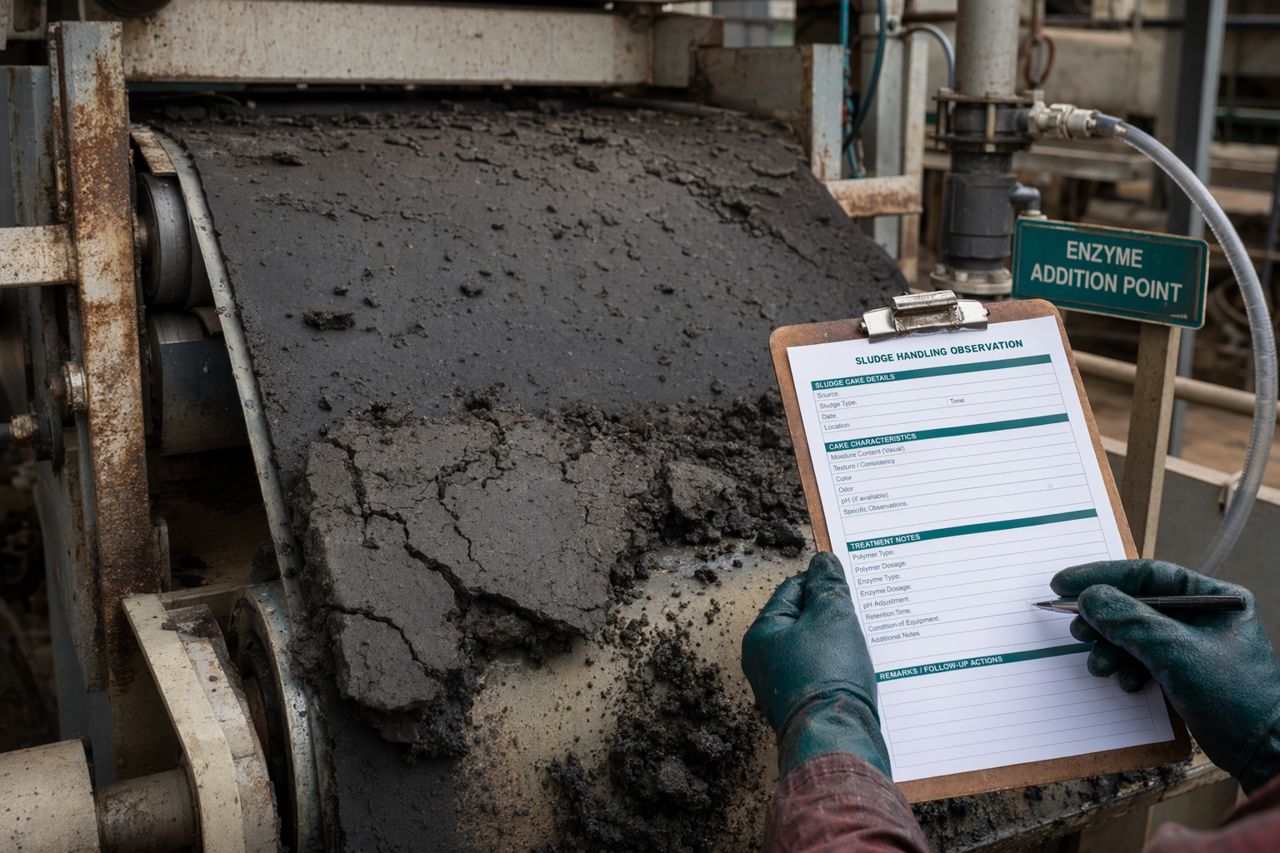
4. Sludge generation and handling record
Sludge is one of the most visible costs in leather goods effluent treatment. Good records help explain why sludge volume changed and whether treatment adjustments improved dewatering or disposal handling.
Track:
- Primary sludge, biological sludge, and mixed sludge movement
- Thickener and dewatering performance observations
- Cake texture, moisture impression, odor, and handling condition
- Disposal contractor records and internal transfer notes
- Abnormal sludge volume linked to production shocks
- Polymer or conditioning changes
- Any enzyme-assisted sludge conditioning trial notes
Where possible, connect sludge notes to upstream events. Fat-heavy production, high suspended solids, and poor equalization can affect sludge quality days after the original load entered the ETP.
5. Odor complaint and response log
Odor records are compliance records, even when they start as site complaints. Tannery effluent can produce odor from sulfide carryover, anaerobic pockets, protein breakdown, and stagnant sludge.
A practical odor log should include:
- Date, time, location, and wind or weather context
- Source suspected by the operator
- Production event or tank condition at the same time
- Immediate action taken, such as mixing check, transfer change, pH correction, enzyme addition, sludge removal, or cover inspection
- Follow-up observation
- Closure sign-off
Auditors look for evidence that the site investigates odor systematically. A short, complete record is stronger than a long explanation written weeks later.
6. Corrective action and deviation file
Every ETP has deviations. The risk is not the deviation itself; the risk is an incomplete response trail.
For each incident, keep a concise file with:
- Trigger condition or nonconformance
- Immediate containment action
- Production and ETP context
- Root cause assessment
- Treatment adjustment made
- Verification record
- Preventive action
- Responsible person and closure date
For enzyme-assisted programs, include whether the enzyme was used as routine support, targeted pretreatment, shock-load recovery support, or sludge handling support. That distinction matters when reviewing cost, value, and repeatability.
A simple audit-ready record map
| Record type | Why it matters | What to connect it to |
|---|---|---|
| Outlet discharge register | Shows compliance position and trend discipline | Production schedule, ETP actions, corrective actions |
| Equalization tank log | Explains incoming variability before treatment | Beamhouse loads, fat/protein carryover, sulfide odor |
| Treatment addition log | Documents what was changed and why | Enzyme use, chemical changes, pump status, operator notes |
| Sludge handling record | Supports disposal, cost, and dewatering review | Influent solids, biological stability, conditioning changes |
| Odor response log | Shows nuisance control and operational follow-up | Sulfide risk, stagnant zones, sludge age, tank condition |
| Deviation file | Proves corrective action discipline | Root cause, verification, closure evidence |
One-minute explainer video
[Embedded faceless explainer video: compliance records for tannery effluent managers. Macro leather grain transitions into an equalization tank, with teal flow overlays showing enzyme-assisted handling of fat, protein, sulfide odor, and sludge layers. On-screen subtitles included.]
How Peltora supports the record trail
As an enzyme supplier for tannery wastewater treatment, Peltora focuses on treatment programs that are practical for operating plants. Our role is not only to supply an enzyme blend. We help ETP teams define where an enzyme intervention belongs, what process condition it is intended to support, and what operational evidence should be recorded.
Typical support areas include:
- Fat and protein load management before downstream stress develops
- Odor reduction support in high-organic or sulfide-prone conditions
- Improved sludge behavior for easier handling and dewatering review
- More stable biological treatment after variable tannery inputs
- Trial structures that compare baseline operation with enzyme-assisted operation
- Record templates for treatment events, operator observations, and follow-up actions
The strongest enzyme program is one your operators can run and your compliance file can explain.
Practical tips before the next audit
- Review whether production events and ETP records use the same dates and shift references.
- Check that abnormal influent conditions are logged before final outlet results change.
- Keep enzyme and chemical treatment records separate enough to understand their individual purpose.
- Capture operator observations while they are fresh, especially odor, scum, foam, and sludge texture.
- Close corrective actions with verification, not just intention.
- Retain supplier batch references and internal approval notes for treatment aids.
- Build one summary page for management that links compliance, sludge, odor, and treatment cost impacts.
Request a quote
If your tannery ETP is facing unstable loads, odor pressure, sludge handling issues, or tighter discharge review, Peltora can help structure an enzyme treatment program around your operating constraints.
Use the on-site request a quote form to share your effluent profile, current ETP layout, and treatment goals. A Peltora technical contact will review the fit and recommend the next practical step.